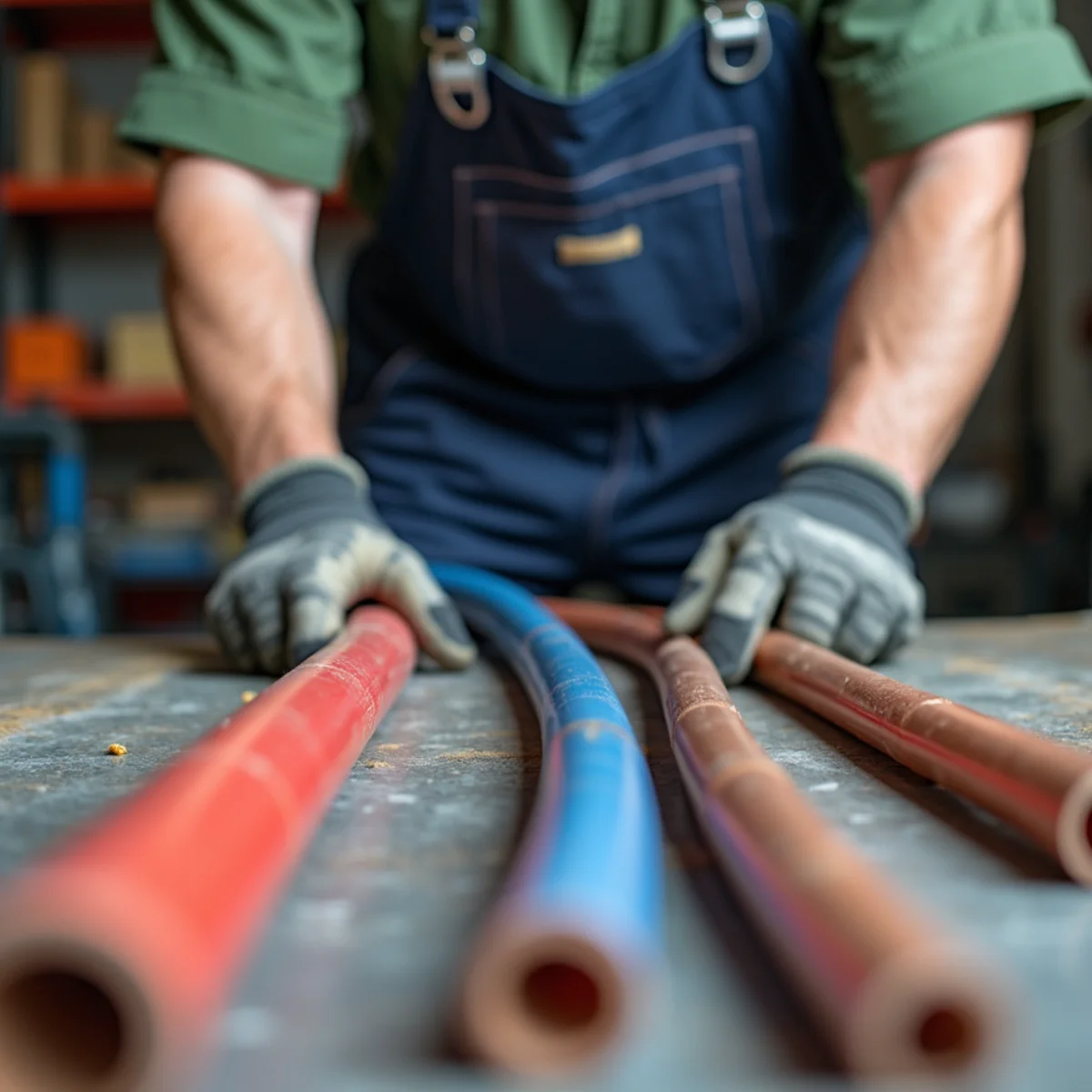
If you're repiping an older Euless home, the choice almost always comes down to PEX or copper. Both are excellent, code-approved materials that will outlast the galvanized or aging copper you're replacing. The short version: PEX is more affordable, flexible, and freeze-resistant with less wall damage to install, while copper is rigid, long-proven, and preferred by some for its track record. Here's how they actually compare.
What they are
PEX is cross-linked polyethylene — a flexible plastic tubing run in continuous lengths with far fewer joints. Copper is rigid metal pipe, cut and soldered at each connection. Both are standard for a modern whole-house repipe.
Cost
PEX is generally less expensive, both for the material and the labor — it installs faster and requires fewer wall openings because it bends around corners instead of needing fittings. Copper costs more and is more labor-intensive. For most repipes, PEX is the more budget-friendly choice. (See repipe vs. repair for when a repipe is worth it at all.)
Durability and lifespan
- Copper — decades of proven service; resistant to many conditions, though it can develop pinhole leaks over a very long life or with aggressive water.
- PEX — rated for 40–50+ years; immune to the corrosion and pinhole leaks that eventually affect metal, though it shouldn't be run in direct sunlight.
Freeze resistance (a real Euless concern)
After Winter Storm Uri and every hard freeze since, this matters here. PEX is more forgiving: its flexibility lets it expand somewhat if water freezes, so it's less likely to burst than rigid copper. It's not freeze-proof — insulation and freeze protection still matter — but it's the more freeze-tolerant option for North Texas winters.
Water quality and taste
Both deliver safe drinking water. Some homeowners feel copper is more inert; others notice no difference with PEX. In hard-water Tarrant County, PEX has an edge in one respect — it doesn't accumulate interior scale and mineral buildup the way metal can over decades.
Installation disruption
Because PEX is flexible and needs fewer access points, a PEX repipe generally means fewer wall openings and less patching — so the project is faster and less disruptive to your home. Copper's rigid runs require more openings.
Which should you choose?
- Choose PEX for lower cost, better freeze tolerance, less wall damage, and no interior scale — the right call for most Euless repipes.
- Choose copper if you specifically prefer a metal system with a decades-long track record and don't mind the higher cost.
We install both and will walk you through the trade-offs for your specific home. Repiping often comes up alongside a failing water service line or recurring leaks — we'll tell you honestly what your home actually needs. We serve Euless and the Mid-Cities, including Richland Hills.
Frequently Asked Questions
Is PEX or copper better for a repipe?
Both are excellent. PEX is more affordable, more freeze-resistant, and installs with less wall damage, which makes it the right choice for most Euless repipes. Copper is a proven metal system some homeowners prefer, at a higher cost. We explain the trade-offs for your home.
Does PEX last as long as copper?
PEX is rated for 40–50+ years and is immune to the corrosion and pinhole leaks that eventually affect metal pipe. Copper has a longer real-world track record. For a typical home, both will far outlast the galvanized or aging pipe you're replacing.
Is PEX safe for drinking water?
Yes. PEX is code-approved for potable water throughout the home. Both PEX and copper deliver safe drinking water; the choice comes down to cost, freeze resistance, installation, and personal preference.
Have a plumbing question or problem?
Our Euless plumbers answer live, 24/7.